

Can a ceramic fuse be used in a motor circuit? This is a question that often comes up in electrical engineering and industrial applications. As a ceramic fuse supplier, I have a deep understanding of the properties and applications of ceramic fuses, and I'm here to provide you with a comprehensive answer.
Understanding Ceramic Fuses
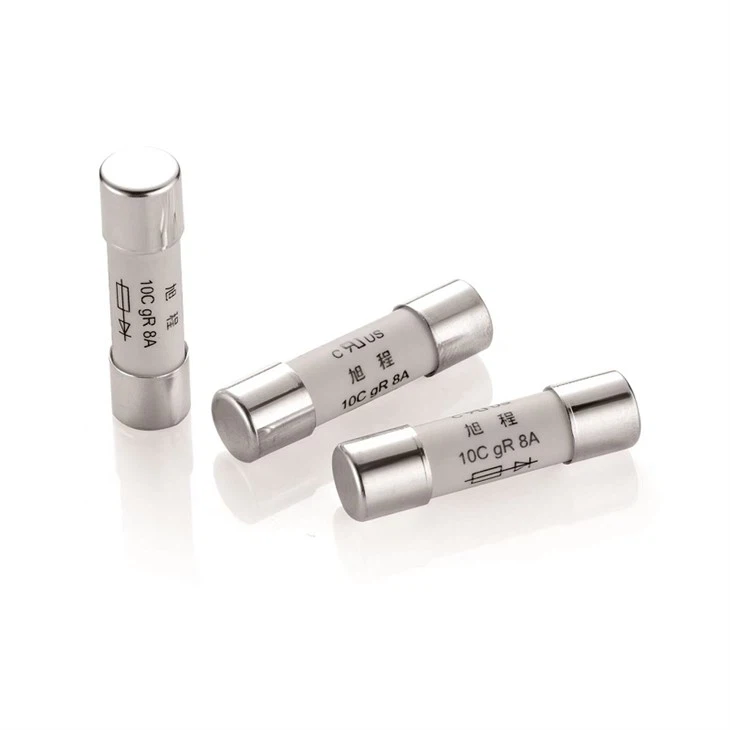
Ceramic fuses are a type of electrical safety device designed to protect circuits from overcurrent conditions. They are made of a ceramic body, which provides excellent insulation and heat resistance, and a metal fuse element, which melts when the current exceeds a certain level, breaking the circuit and preventing damage to the electrical equipment.
There are different sizes of ceramic fuses available, such as 5x20mm Ceramic Fuses, 10x38mm Ceramic Fuses, and 6x32mm Ceramic Fuses. These various sizes are designed to meet different application requirements in terms of current ratings, voltage ratings, and breaking capacity.
Characteristics of Motor Circuits
Motor circuits are unique in that they have special electrical characteristics. When a motor starts, it typically draws a high inrush current, which can be several times higher than its normal operating current. This inrush current is necessary to overcome the inertia of the motor's rotor and start the rotation. Once the motor reaches its normal operating speed, the current drops to a lower, steady-state value.
In addition to the inrush current, motor circuits may also be subject to overloads due to mechanical problems such as jamming or excessive loads on the motor shaft. These overloads can cause the current in the circuit to increase significantly, potentially damaging the motor and other components in the circuit.
Factors to Consider When Using Ceramic Fuses in Motor Circuits
Current Rating
One of the most important factors to consider when using a ceramic fuse in a motor circuit is the current rating. The current rating of the fuse should be carefully selected to ensure that it can withstand the inrush current without blowing, while still providing protection against overloads. A fuse with a too-low current rating may blow during normal motor startup, causing unnecessary downtime. On the other hand, a fuse with a too-high current rating may not provide adequate protection against overloads, which can lead to motor damage.
Time-Current Characteristics
The time-current characteristics of the ceramic fuse are also crucial. These characteristics describe how the fuse responds to different levels of overcurrent over time. For motor circuits, a fuse with a slow-blow or time-delay characteristic is often preferred. A slow-blow fuse can tolerate the high inrush current during motor startup without immediately blowing, but will quickly break the circuit in the event of a sustained overload.
Breaking Capacity
The breaking capacity of a fuse refers to its ability to safely interrupt the circuit when an overcurrent occurs. In motor circuits, especially those with high-power motors, the short-circuit current can be very large. Therefore, the ceramic fuse used in the motor circuit must have a sufficient breaking capacity to safely interrupt the circuit and prevent arcing and other hazards.
Advantages of Using Ceramic Fuses in Motor Circuits
High Temperature Resistance
Ceramic fuses have excellent high temperature resistance, which is beneficial in motor circuits. Motors can generate a significant amount of heat during operation, and the high temperature environment may affect the performance of some fuses. However, ceramic fuses can maintain their stability and performance even in relatively high temperature conditions.
Good Insulation Properties
The ceramic body of the fuse provides good insulation, which helps to prevent electrical leakage and short circuits. This is important for ensuring the safety and reliability of the motor circuit.
Wide Range of Current and Voltage Ratings
As a ceramic fuse supplier, we offer a wide range of current and voltage ratings for our ceramic fuses. This allows us to provide suitable fuses for different types and sizes of motor circuits, meeting the diverse needs of our customers.
Potential Limitations
Inrush Current Tolerance
Although slow-blow ceramic fuses can tolerate some inrush current, in some cases with very high inrush currents, the fuse may still blow prematurely. This requires careful selection and calculation of the fuse based on the specific motor parameters.

Cost
Compared to some other types of fuses, ceramic fuses may be relatively more expensive. However, considering their excellent performance and reliability, the additional cost may be justified in many motor circuit applications.
How to Select the Right Ceramic Fuse for a Motor Circuit
When selecting a ceramic fuse for a motor circuit, the following steps can be followed:
- Determine the normal operating current of the motor. This information can usually be found in the motor's datasheet.
- Calculate the inrush current of the motor. This may require some knowledge of the motor's starting characteristics and may also be provided in the datasheet.
- Select a fuse with a current rating that is slightly higher than the normal operating current but can withstand the inrush current without blowing. A slow-blow or time-delay fuse is often a good choice.
- Ensure that the fuse has a sufficient breaking capacity for the motor circuit. This can be determined based on the short-circuit current of the circuit.
- Consider the voltage rating of the fuse. It should be equal to or higher than the voltage of the motor circuit.
Conclusion
In conclusion, a ceramic fuse can be used in a motor circuit, but careful consideration must be given to various factors such as current rating, time-current characteristics, and breaking capacity. As a ceramic fuse supplier, we have the expertise and a wide range of products to help you select the right ceramic fuse for your motor circuit.
If you are in need of ceramic fuses for your motor circuits or have any questions about fuse selection, please feel free to contact us for further discussion and procurement. We are committed to providing you with high-quality products and professional technical support.
References
- Electrical Engineering Handbook, Third Edition, CRC Press
- Motor Design and Application Guide, IEEE Press