

Can I use fuse clips for high - voltage circuits?
As a supplier of fuse clips, I often encounter customers asking whether they can use our fuse clips for high - voltage circuits. This is a crucial question that requires a comprehensive understanding of both fuse clips and high - voltage circuits.
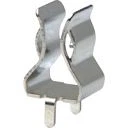
First, let's understand what fuse clips are. Fuse clips are essential components in electrical circuits. They are designed to hold fuses securely in place, ensuring proper electrical contact. Fuse clips come in various sizes and specifications to accommodate different types of fuses. For example, we offer Fuse Clips 6.35x32mm and Fuse Clips 5.2x20mm, which are widely used in different electrical applications.

High - voltage circuits, on the other hand, operate at significantly higher voltages than standard low - voltage circuits. These circuits are commonly found in power transmission, industrial machinery, and some specialized electrical equipment. The voltage levels in high - voltage circuits can range from several hundred volts to thousands or even millions of volts in some extreme cases.
When considering using fuse clips in high - voltage circuits, several factors need to be taken into account.
Insulation and Dielectric Strength
One of the most critical factors is the insulation and dielectric strength of the fuse clips. In high - voltage circuits, the fuse clips must be able to withstand the high electric field without breaking down. If the insulation is not sufficient, it can lead to electrical arcing, which can cause damage to the fuse, the circuit, and even pose a safety hazard. Our fuse clips are made from high - quality insulating materials that are carefully selected to provide adequate dielectric strength. However, for extremely high - voltage applications, additional insulation measures may be required.
Current - Carrying Capacity
High - voltage circuits often carry large amounts of current. The fuse clips must have a sufficient current - carrying capacity to handle the load without overheating. Overheating can not only damage the fuse clips but also cause the fuse to blow prematurely or malfunction. Our fuse clips are designed with appropriate cross - sectional areas and materials to ensure they can carry the required current safely. But it's important to note that the current - carrying capacity also depends on the ambient temperature and the duration of the current flow.
Mechanical Strength
In high - voltage circuits, there may be mechanical stresses due to factors such as vibration, thermal expansion, and electromagnetic forces. The fuse clips need to have sufficient mechanical strength to maintain their shape and hold the fuse firmly in place. A loose connection can lead to increased resistance, which can cause overheating and potential failure. Our fuse clips are engineered to have high mechanical strength, and they are tested to ensure they can withstand the mechanical stresses commonly encountered in high - voltage environments.
Arc - Quenching Ability
When a fuse blows in a high - voltage circuit, an arc is formed. The fuse clips need to have the ability to quench this arc quickly and effectively. If the arc is not quenched properly, it can continue to conduct electricity, which can cause further damage to the circuit. Our fuse clips are designed with features that help to extinguish the arc rapidly, reducing the risk of damage and ensuring the safety of the circuit.
However, it's important to note that not all of our standard fuse clips are suitable for high - voltage circuits. For high - voltage applications, we offer specialized fuse clips that are specifically designed and tested to meet the requirements of these circuits. These specialized fuse clips undergo rigorous quality control processes to ensure they can perform reliably in high - voltage environments.
If you are unsure whether our fuse clips are suitable for your high - voltage circuit, we recommend consulting with our technical team. Our experts have extensive knowledge and experience in the field of electrical components and can provide you with professional advice based on your specific application.
In conclusion, while it is possible to use fuse clips in high - voltage circuits, careful consideration must be given to various factors such as insulation, current - carrying capacity, mechanical strength, and arc - quenching ability. Our company is committed to providing high - quality fuse clips that can meet the needs of different electrical applications, including high - voltage circuits.
If you are interested in purchasing fuse clips for your high - voltage or other electrical projects, we welcome you to contact us for further discussion. Our team is ready to assist you in finding the most suitable fuse clips for your specific requirements.
References
- Electrical Engineering Handbook, Third Edition, CRC Press
- High - Voltage Engineering: Fundamentals, Springer