

Do fuse clips have a rated power consumption? This is a question that often comes up in the electrical engineering and electronics industries. As a supplier of fuse clips, I'm frequently asked about the power consumption ratings of our products. In this blog post, I'll delve into this topic, providing a detailed analysis and shedding light on the intricacies of fuse clip power consumption.
Understanding Fuse Clips
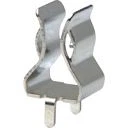
Before we discuss power consumption, let's first understand what fuse clips are. Fuse clips are essential components in electrical circuits. They are designed to hold fuses securely in place, ensuring proper electrical contact. Fuses are safety devices that protect electrical circuits from overcurrent by melting and breaking the circuit when the current exceeds a certain level. Fuse clips play a crucial role in this process by providing a stable connection between the fuse and the circuit.
There are various types and sizes of fuse clips available in the market. For instance, we offer Fuse Clips 6.35x32mm and Fuse Clips 5.2x20mm, which are commonly used in different applications. These fuse clips are made from high - quality materials to ensure durability and reliable electrical performance.
The Concept of Power Consumption
Power consumption in an electrical component is typically calculated using the formula (P = VI), where (P) is power in watts, (V) is voltage in volts, and (I) is current in amperes. For a fuse clip, the power consumption is related to the electrical resistance of the clip and the current flowing through it.
When current passes through a fuse clip, there is a small amount of resistance in the clip's material. According to Ohm's law ((V = IR)), this resistance causes a voltage drop across the clip. And using the power formula, this voltage drop and the current result in power dissipation in the form of heat.
Rated Power Consumption of Fuse Clips
In general, fuse clips do have a rated power consumption, although it is often quite small. The rated power consumption is determined by the maximum current the fuse clip can handle and its internal resistance.
Manufacturers specify the current rating of fuse clips. For example, a fuse clip with a current rating of 10A is designed to safely carry a maximum current of 10A without overheating or causing damage. The internal resistance of the fuse clip is also a key factor. A lower resistance fuse clip will have less power consumption for a given current.
To calculate the approximate power consumption of a fuse clip, we can measure its resistance using a multimeter and then use the power formula. Suppose a fuse clip has a resistance (R) of 0.01 ohms and a current (I) of 5A flowing through it. Using (P=I^{2}R) (derived from (P = VI) and (V = IR)), we get (P=(5)^{2}\times0.01 = 0.25) watts.
However, the rated power consumption is not just about the normal operating conditions. It also takes into account factors such as temperature rise. When a fuse clip operates at its maximum current rating, the power dissipation will cause the temperature of the clip to rise. If the temperature rises too high, it can affect the performance of the fuse clip and even the overall circuit. So, the rated power consumption is set to ensure that the fuse clip can operate within a safe temperature range.
Factors Affecting Power Consumption
Material of the Fuse Clip
The material used to make the fuse clip has a significant impact on its resistance and thus power consumption. Copper is a commonly used material for fuse clips because it has low electrical resistance. This means that copper fuse clips will have lower power consumption compared to clips made from materials with higher resistance.
Surface Finish
The surface finish of the fuse clip can also affect its power consumption. A smooth and clean surface finish reduces the contact resistance between the fuse and the clip. On the other hand, a corroded or rough surface can increase the resistance, leading to higher power consumption.
Contact Pressure
Proper contact pressure between the fuse and the fuse clip is crucial. If the contact pressure is too low, the contact resistance will increase, resulting in higher power consumption. Conversely, excessive contact pressure can damage the fuse or the clip, but within the normal range, adequate contact pressure helps maintain low resistance and low power consumption.

Importance of Knowing the Rated Power Consumption
Circuit Design
For electrical engineers and circuit designers, knowing the rated power consumption of fuse clips is essential. It helps in determining the overall power budget of the circuit. In a large - scale electrical system with multiple fuse clips, the cumulative power consumption of all the clips can be significant. By choosing fuse clips with lower power consumption, designers can optimize the energy efficiency of the system.
Safety
Understanding the rated power consumption is also important for safety reasons. If a fuse clip is operated beyond its rated power consumption, it can overheat. Overheating can cause the insulation around the clip to melt, leading to short - circuits and potentially fire hazards.
Applications and Power Consumption Considerations
In different applications, the power consumption of fuse clips can have different implications.
Automotive Applications
In automotive electrical systems, there are numerous fuse clips used to protect various circuits such as lighting, audio systems, and engine control units. Since the automotive battery has a limited power supply, using fuse clips with low power consumption can help extend the battery life. Also, the confined space in a vehicle means that excessive heat generated by high - power - consuming fuse clips can be a safety concern.
Industrial Control Panels
Industrial control panels often have a large number of electrical components, including many fuse clips. The power consumption of these clips can add up, and it is important to choose clips with appropriate power ratings to ensure the overall stability and energy efficiency of the control panel.
Conclusion
In conclusion, fuse clips do have a rated power consumption. Although it is usually relatively small, it is an important parameter that affects the performance, safety, and energy efficiency of electrical circuits. As a supplier of fuse clips, we ensure that our products are accurately rated in terms of power consumption. Our Fuse Clips 6.35x32mm and Fuse Clips 5.2x20mm are designed to meet the highest standards of quality and performance, with well - defined power consumption ratings.
If you are in need of high - quality fuse clips for your electrical projects, we invite you to contact us for more information and to discuss your specific requirements. Our team of experts is ready to assist you in choosing the most suitable fuse clips for your applications.
References
- Grob, Bernard. "Basic Electronics". McGraw - Hill Education.
- Boylestad, Robert L. "Introductory Circuit Analysis". Pearson Education.