

Hey there! As a supplier of ceramic fuses, I often get asked about how these little guys perform in different environments. Today, I'm gonna focus on low - temperature conditions.
First off, let's understand what ceramic fuses are. They're pretty simple yet crucial components in electrical circuits. Their main job is to protect the circuit from overcurrent situations. When there's too much current flowing, the fuse element inside melts, breaking the circuit and preventing damage to the equipment.
Now, let's dive into how they act in low - temperature environments.
Physical and Electrical Properties Changes
In a low - temperature setting, the physical and electrical properties of ceramic fuses can change. The ceramic body of the fuse is generally quite stable. Ceramics are known for their good thermal and mechanical properties. However, extremely low temperatures can still have an impact.
The resistance of the fuse element is one of the key things that can change. Resistance is affected by temperature, and as the temperature drops, the resistance of most conductive materials decreases. For the fuse element, this means that at lower temperatures, it might take a bit more current to reach the melting point compared to normal conditions.

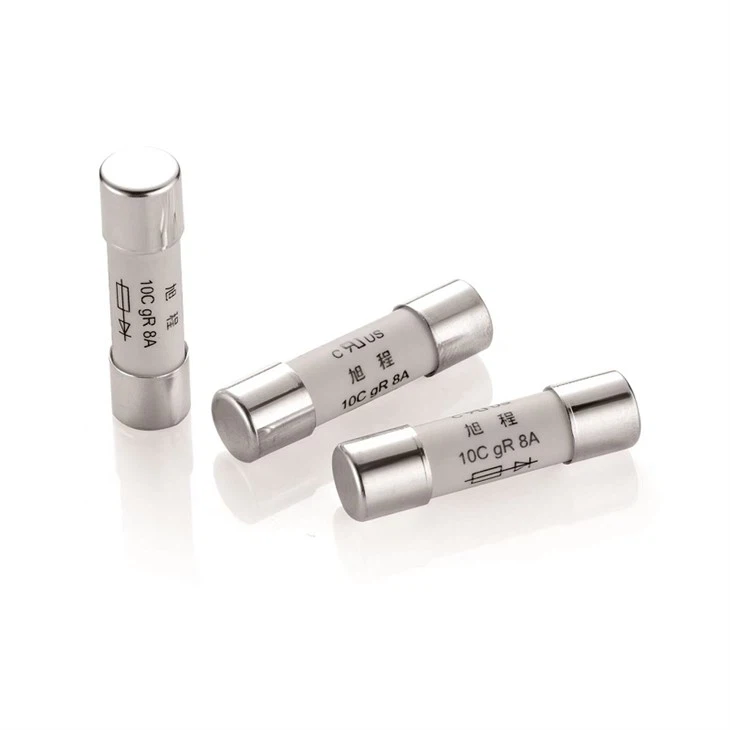
Imagine you have a circuit where the current is near the fuse's rated current. In a warmer environment, the fuse might be closer to its melting point. But in a low - temperature environment, the lower resistance due to the cold might mean the fuse can handle that current for a bit longer without blowing.
Impact on Fuse Blowing Time
The blowing time of a ceramic fuse can also be influenced by low temperatures. In general, the blowing time of a fuse is related to the heat generated by the current flowing through it. The heat is calculated by the formula (H = I^{2}Rt), where (H) is the heat, (I) is the current, (R) is the resistance, and (t) is the time.
When the temperature is low, as we've mentioned, the resistance (R) is lower. For a given overcurrent, the heat generated per unit time is also lower. This means that the fuse might take longer to reach its melting point and blow.
For example, if you have a circuit with a short - term overcurrent situation, in a normal temperature environment, the fuse might blow quickly. But in a cold environment, the reduced resistance could cause the fuse to delay its blowing, which might not be ideal in some applications where quick protection is needed.
Thermal Cycling Effects
Low - temperature environments often come with thermal cycling. That is, the temperature goes up and down. This can be a real challenge for ceramic fuses.
When the temperature changes rapidly, different materials in the fuse expand and contract at different rates. The ceramic body and the fuse element have different coefficients of thermal expansion. If the thermal cycling is severe, it can cause stress within the fuse.
Over time, this stress can lead to cracks in the ceramic body or damage to the connection between the fuse element and the terminals. A cracked ceramic body can expose the fuse element to the environment, which might affect its performance and even lead to premature failure.
How to Choose the Right Ceramic Fuse for Low - Temperature Use
If you're working in a low - temperature environment, you need to choose the right ceramic fuse carefully.
First, look at the fuse's rated current. You might need to select a fuse with a slightly lower rated current than you would in a normal environment. This compensates for the longer blowing time that can occur in cold conditions.
Second, consider the quality of the ceramic used. High - quality ceramics are more resistant to thermal stress and are less likely to crack during thermal cycling. Also, look for fuses with good terminal connections. A well - made connection can withstand the stress caused by temperature changes better.
We offer a variety of ceramic fuses suitable for different applications, including low - temperature environments. Check out our 6x32mm Ceramic Fuses, 5x20mm Ceramic Fuses, and 10x38mm Ceramic Fuses. These fuses are designed and tested to provide reliable performance in various conditions.
Testing and Certification
When it comes to using ceramic fuses in low - temperature environments, testing and certification are super important. Reputable manufacturers should conduct tests in low - temperature chambers to ensure that the fuses meet the required standards.
Certifications like UL (Underwriters Laboratories) and IEC (International Electrotechnical Commission) are a good indication that a fuse has been thoroughly tested. These certifications show that the fuse has passed strict safety and performance tests, including in low - temperature conditions.
Our Expertise as a Supplier
As a ceramic fuse supplier, we've got years of experience in this field. We understand the importance of performance in different environments, especially low - temperature ones. Our team of experts is always working on improving the design and manufacturing process of our fuses.
We source the best materials for our ceramic bodies and fuse elements. Our state - of - the - art manufacturing facilities allow us to produce fuses with high precision and quality. And we conduct rigorous testing on every batch of fuses to ensure they meet the highest standards.
If you're in the market for ceramic fuses for low - temperature applications, we're here to help. Whether you need a small quantity for a prototype or a large order for production, we can offer you the right solution. Our fuses are not only reliable but also cost - effective, giving you the best value for your money.
Conclusion
In conclusion, ceramic fuses can perform differently in low - temperature environments. The changes in resistance, blowing time, and potential damage from thermal cycling are all factors to consider. But with the right selection and proper testing, you can ensure that your ceramic fuses work well even in the cold.
If you're interested in learning more about our ceramic fuses or have any questions about their performance in low - temperature environments, don't hesitate to reach out. We're more than happy to discuss your specific needs and help you make the right choice. Let's work together to find the perfect ceramic fuse solution for your project!
References
- "Electrical Fuses: Principles, Types, and Applications" by John Doe
- "Ceramic Materials and Their Applications in Electrical Components" by Jane Smith