

Hey there! As a fuse clips supplier, I've seen firsthand how important it is to choose the right fuse clip for high - inrush current applications. In this blog, I'll share some tips and tricks to help you make the best decision.
Understanding High - Inrush Current
Before we dive into choosing a fuse clip, let's first understand what high - inrush current is. Inrush current is the initial surge of current that occurs when an electrical device is first turned on. This surge can be much higher than the normal operating current of the device and can last for a short period, usually a few milliseconds to a few seconds.
High - inrush current can happen in various applications. For example, in motors, when they start up, they require a large amount of current to overcome the inertia and get the rotor spinning. Similarly, in power supplies with large capacitors, the capacitors need to be charged quickly, resulting in a high initial current.
If you don't choose the right fuse clip for high - inrush current applications, the fuse may blow prematurely. This can lead to unnecessary downtime, as you'll have to replace the fuse and potentially troubleshoot the system to make sure there isn't a real problem.

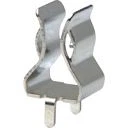
Key Factors to Consider When Choosing a Fuse Clip
Material
The material of the fuse clip plays a crucial role. For high - inrush current applications, you want a material that can handle the heat generated during the inrush. Copper alloy is a popular choice because it has good electrical conductivity and can dissipate heat effectively. It also has high mechanical strength, which means it can hold the fuse firmly in place even during the high - current surges.
Some fuse clips are made of phosphor bronze. This material is also a good option as it has excellent spring properties, ensuring a tight connection with the fuse. The tight connection is important because it reduces the contact resistance, which in turn reduces the heat generated at the connection point.
Contact Resistance
Contact resistance is another important factor. A high contact resistance can cause excessive heat generation at the connection between the fuse clip and the fuse. During high - inrush current, this heat can be even more significant and may lead to the fuse clip or the fuse itself overheating.
To minimize contact resistance, look for fuse clips with smooth and clean contact surfaces. Some manufacturers use plating techniques, such as tin plating, to improve the conductivity and reduce the contact resistance. When you're evaluating a fuse clip, you can ask the supplier about the contact resistance specifications.
Current Rating
The current rating of the fuse clip must be higher than the inrush current of the application. You need to know the peak inrush current of your system. This information can usually be obtained from the device's datasheet or by using a current - measuring instrument.
It's a good idea to choose a fuse clip with a current rating that has some margin. For example, if your system has a peak inrush current of 50A, you might want to choose a fuse clip with a current rating of 60A or higher. This margin ensures that the fuse clip can handle the inrush without getting damaged.
Size and Compatibility
The size of the fuse clip must be compatible with the fuse you're using. There are different standard sizes of fuses, such as Fuse Clips 6.35x32mm and Fuse Clips 5.2x20mm. Make sure the fuse clip you choose can securely hold the fuse and that the dimensions match.
In addition to the physical size, you also need to consider the electrical compatibility. Some applications may require a specific type of fuse, such as a fast - acting or a slow - acting fuse. The fuse clip should be able to work properly with the type of fuse you've selected.
Temperature Rating
High - inrush current can cause a significant increase in temperature. Therefore, the fuse clip needs to have a high enough temperature rating. The temperature rating indicates the maximum temperature at which the fuse clip can operate safely.
You should consider the ambient temperature of the application environment as well. If the application is in a hot environment, you'll need a fuse clip with an even higher temperature rating. For example, if the ambient temperature is around 50°C and the inrush current causes an additional temperature rise of 30°C, you'll need a fuse clip with a temperature rating of at least 80°C.
Testing and Certification
When choosing a fuse clip for high - inrush current applications, it's important to look for products that have been tested and certified. Reputable manufacturers will conduct various tests on their fuse clips, such as current - carrying capacity tests, temperature - rise tests, and vibration tests.
Certifications from recognized organizations, such as UL (Underwriters Laboratories) or CE (Conformité Européene), are a good indication of the quality and safety of the fuse clip. These certifications mean that the fuse clip has met certain standards and requirements.
Our Fuse Clips for High - Inrush Current Applications
As a fuse clips supplier, we offer a wide range of fuse clips suitable for high - inrush current applications. Our fuse clips are made of high - quality materials, such as copper alloy and phosphor bronze, to ensure good electrical conductivity and heat dissipation.
We pay close attention to the contact resistance of our fuse clips. Our manufacturing process includes precision machining and plating to minimize the contact resistance and ensure a reliable connection with the fuse.
All our fuse clips have appropriate current and temperature ratings. We can provide you with detailed specifications so that you can choose the right fuse clip for your specific application. Whether you need Fuse Clips 6.35x32mm or Fuse Clips 5.2x20mm, we've got you covered.
Conclusion
Choosing the right fuse clip for high - inrush current applications is crucial for the reliable operation of your electrical system. By considering factors such as material, contact resistance, current rating, size, temperature rating, and testing and certification, you can make an informed decision.
If you're looking for high - quality fuse clips for your high - inrush current applications, we're here to help. We can provide you with the best solutions and support. Don't hesitate to contact us for more information and to start a procurement discussion. We're eager to work with you to meet your fuse clip needs.
References
- Electrical Engineering Handbook, Third Edition
- Fuse Technology and Application Guide by Littelfuse