

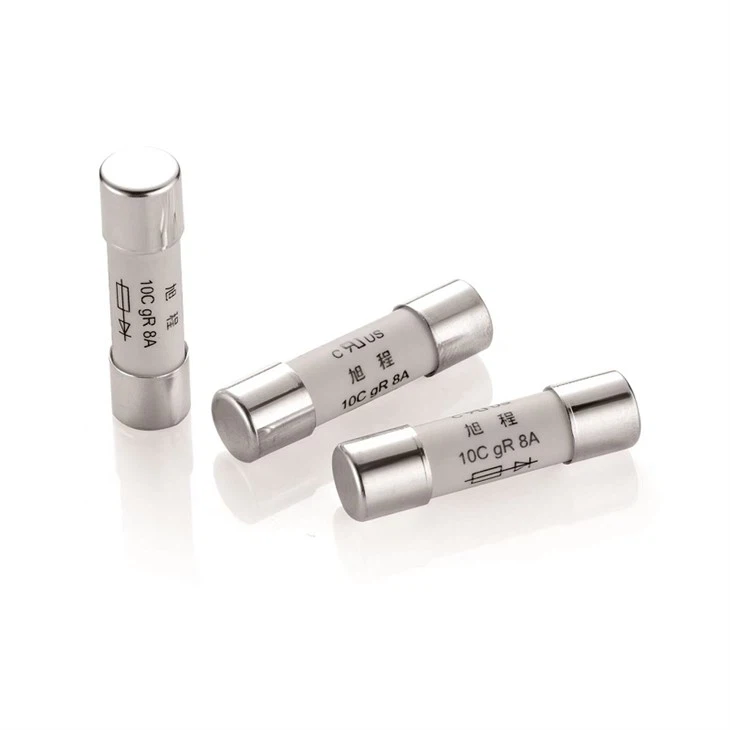
Hey there! As a ceramic fuse supplier, I've seen firsthand how magnetic fields can mess with these little guys. Ceramic fuses are super important in all sorts of electrical systems, protecting them from overcurrents. But when magnetic fields come into play, things can get a bit tricky. So, in this blog, I'm gonna share some tips on how to minimize the magnetic field effect on a ceramic fuse.

Understanding the Problem
First off, let's talk about why magnetic fields are a problem for ceramic fuses. Ceramic fuses work by melting a metal element inside when the current gets too high. This breaks the circuit and protects the rest of the system. But magnetic fields can induce currents in the fuse and its surroundings. These induced currents can cause the fuse to heat up more than it should, leading to premature blowing or even inaccurate operation.
There are different sources of magnetic fields. For example, transformers, motors, and even some types of power lines can generate strong magnetic fields. If your ceramic fuse is placed too close to these sources, it's gonna be affected.
Placement is Key
One of the simplest ways to minimize the magnetic field effect is to be smart about where you place the ceramic fuse. You want to keep it as far away from magnetic field sources as possible.
Let's say you're working on an electrical panel that has a big transformer. If you place the 3.6 X10mm Ceramic Fuses right next to the transformer, it's gonna be bombarded with the magnetic field. Instead, try to find a spot on the panel that's further away. Maybe on the opposite side or in a corner where the magnetic field is weaker.
The same goes for motors. Motors create a lot of magnetic activity when they're running. So, if you're installing a 10x38mm Ceramic Fuses in a device with a motor, make sure it's not right next to the motor housing. You can use some spacers or barriers to increase the distance between the fuse and the motor.
Shielding
Another great way to protect your ceramic fuse from magnetic fields is through shielding. There are special materials that can block or reduce the strength of magnetic fields.
One common shielding material is mu-metal. Mu-metal has a high magnetic permeability, which means it can attract and redirect magnetic fields around the object you're trying to protect. You can make a shield out of mu-metal and place your ceramic fuse inside it. This way, the magnetic field has to go through the shield instead of directly hitting the fuse.
There are also other types of shielding materials available, like conductive polymers. These materials work by creating an electromagnetic field that opposes the external magnetic field. They're a bit more flexible than mu-metal and can be used in different shapes and sizes.
Orientation Matters
The orientation of the ceramic fuse can also have an impact on how it's affected by magnetic fields. Magnetic fields have a direction, and if the fuse is aligned in a certain way, it can experience more or less of the field.
For example, if you have a 5x20mm Ceramic Fuses and the magnetic field is coming from a horizontal direction, you might want to orient the fuse vertically. This way, the magnetic field has to pass through the sides of the fuse rather than directly through the length, which can reduce the induced currents.
It's a good idea to test different orientations during the installation process. You can use a magnetic field meter to measure the strength of the field around the fuse in different orientations and choose the one that gives the lowest reading.
Selecting the Right Fuse
Not all ceramic fuses are created equal when it comes to magnetic field resistance. Some fuses are designed to be more resistant to magnetic fields than others.
When you're choosing a ceramic fuse for an application where magnetic fields are a concern, look for fuses that have been tested and rated for magnetic field immunity. These fuses usually have some kind of special construction or materials that help reduce the impact of magnetic fields.
You can also consider the size and shape of the fuse. Smaller fuses may be less affected by magnetic fields because they have less surface area for the field to interact with. However, you still need to make sure the fuse can handle the electrical requirements of your system.
Monitoring and Maintenance
Even if you've taken all the precautions to minimize the magnetic field effect on your ceramic fuse, it's still important to monitor and maintain it regularly.
Check the fuse periodically to see if there are any signs of overheating or damage. If you notice that the fuse is getting hot or if it has blown prematurely, it could be a sign that the magnetic field is still having an impact. In this case, you may need to reevaluate your placement, shielding, or orientation.
It's also a good idea to keep track of the operating conditions of your electrical system. If there are any changes in the magnetic field sources, such as a new motor being added or a transformer being upgraded, you may need to make adjustments to protect the ceramic fuse.
Conclusion
Minimizing the magnetic field effect on a ceramic fuse is all about being proactive. By carefully considering placement, using shielding, paying attention to orientation, selecting the right fuse, and performing regular monitoring and maintenance, you can ensure that your ceramic fuse works properly and protects your electrical system.
If you're in the market for high - quality ceramic fuses or need more advice on dealing with magnetic fields, feel free to reach out. We're here to help you find the best solutions for your electrical needs.
References
- "Electrical Engineering Handbook" by Richard C. Dorf
- "Magnetic Fields and Their Effects on Electrical Components" - Journal of Electrical Science and Technology