

Hey there! As a supplier of fuse clips, I often get asked about the differences between single - pole and double - pole fuse clips. It's a topic that might seem a bit technical at first, but once you break it down, it's actually pretty straightforward. So, let's dive in and explore what sets these two types of fuse clips apart.

What's a Fuse Clip Anyway?
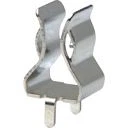
Before we get into the single - pole and double - pole stuff, let me quickly explain what a fuse clip is. A fuse clip is a device used to hold a fuse in place within an electrical circuit. Fuses are safety devices that protect electrical systems from overcurrent conditions. When too much current flows through a circuit, the fuse "blows," breaking the circuit and preventing damage to the equipment. Fuse clips ensure that the fuse is securely connected to the circuit, allowing for easy replacement when needed.
Single - Pole Fuse Clips
Single - pole fuse clips are the simpler of the two. As the name suggests, they have one pole or connection point. These are typically used in circuits where only one line of current needs to be interrupted. For example, in a basic lighting circuit, a single - pole fuse clip can be used to protect the circuit from overcurrent.
One of the main advantages of single - pole fuse clips is their simplicity. They're easy to install and are generally less expensive than double - pole fuse clips. They're also more compact, which makes them a great choice for applications where space is limited.
However, single - pole fuse clips have their limitations. They can only protect one line of current. In some electrical systems, there are multiple lines of current that need to be protected simultaneously. In these cases, a single - pole fuse clip won't cut it.
Double - Pole Fuse Clips
Double - pole fuse clips, on the other hand, have two poles or connection points. This means they can interrupt two lines of current at the same time. They're commonly used in circuits where both the live and neutral wires need to be protected.
A great example of where double - pole fuse clips are used is in larger electrical appliances like refrigerators or washing machines. These appliances draw a significant amount of power, and having a double - pole fuse clip ensures that both the live and neutral wires are protected from overcurrent.
The main advantage of double - pole fuse clips is their enhanced safety. By interrupting both the live and neutral wires, they provide an extra layer of protection for the electrical system and the users. However, they're more complex and expensive than single - pole fuse clips. They also take up more space, which can be a drawback in some applications.
Applications and Use Cases
Let's take a closer look at some specific applications for single - pole and double - pole fuse clips.
Single - Pole Fuse Clips
- Small Electrical Devices: Single - pole fuse clips are commonly used in small electrical devices like table lamps, chargers, and small fans. These devices typically have a simple electrical circuit that only requires protection on one line of current.
- Low - Power Circuits: In low - power circuits, such as those found in electronic toys or small sensors, single - pole fuse clips are a cost - effective and space - saving solution.
Double - Pole Fuse Clips
- High - Power Appliances: As mentioned earlier, high - power appliances like refrigerators, washing machines, and electric heaters require double - pole fuse clips. These appliances draw a large amount of current, and protecting both the live and neutral wires is crucial for safety.
- Industrial Electrical Systems: In industrial settings, electrical systems are often more complex and draw a significant amount of power. Double - pole fuse clips are used to protect these systems from overcurrent and ensure the safety of the equipment and the workers.
Our Product Range
At our company, we offer a wide range of fuse clips to meet different needs. Whether you're looking for single - pole or double - pole fuse clips, we've got you covered.
We have Fuse Clips 6.35x32mm, which are suitable for a variety of applications. These fuse clips are made of high - quality materials and are designed to provide reliable protection for your electrical circuits.
We also offer Fuse Clips 5.2x20mm. These smaller fuse clips are perfect for applications where space is limited, such as in small electronic devices.
Choosing the Right Fuse Clip
When it comes to choosing between a single - pole and double - pole fuse clip, there are a few things you need to consider.
- Circuit Requirements: First and foremost, you need to understand the requirements of your electrical circuit. If you only need to protect one line of current, a single - pole fuse clip will do the job. However, if you need to protect both the live and neutral wires, a double - pole fuse clip is the way to go.
- Space Constraints: If you're working in a tight space, a single - pole fuse clip might be a better choice due to its compact size. On the other hand, if space isn't an issue, you can opt for a double - pole fuse clip for enhanced safety.
- Budget: Cost is always a factor. Single - pole fuse clips are generally less expensive than double - pole fuse clips. If you're on a tight budget, a single - pole fuse clip might be the more practical option.
Conclusion
In conclusion, the main difference between single - pole and double - pole fuse clips lies in the number of poles and the ability to interrupt current. Single - pole fuse clips are simple, compact, and cost - effective, making them suitable for basic circuits. Double - pole fuse clips, on the other hand, provide enhanced safety by interrupting two lines of current, but they're more complex and expensive.
If you're in the market for fuse clips, whether it's single - pole or double - pole, we're here to help. We've got a great selection of high - quality fuse clips to meet your needs. Don't hesitate to reach out to us for more information or to discuss your specific requirements. We're always happy to assist you in finding the right fuse clips for your application.
References
- Electrical Safety Standards Handbook
- Guide to Fuse and Fuse Clip Selection